The Ascension in Karl Barth by Andrew Burgess
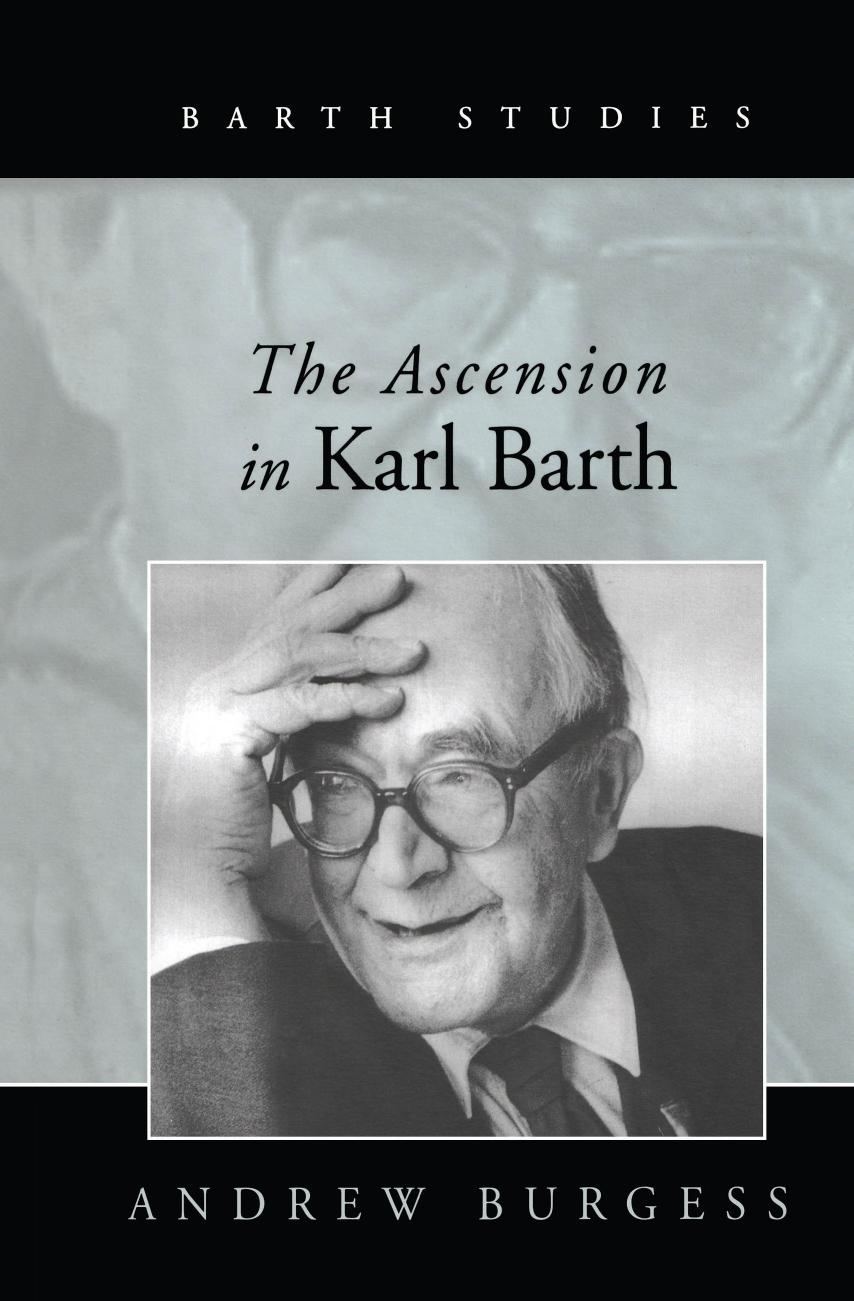
Author:Andrew Burgess
Language: eng
Format: epub, pdf
Publisher: Taylor & Francis (CAM)
Published: 2004-03-03T16:00:00+00:00
* * *
1 It is necessary to note that Barth’s concern is a theological one, i.e. the freedom and Lordship of God, even in reconciliation and revelation, while Johnson’s is philosophical and specifically epistemological.
2 Barth, Karl The Epistle to the Romans trans. E.C. Hoskyns, London: Oxford University Press, 1933, p. 314, (cited by Johnson, The Mystery of God p. 130).
3 Johnson, The Mystery of God p. 131.
4 Barth, Karl Evangelical Theology: An Introduction Grand Rapids, Michigan: Eerdmans, 1963, p. 79.
5 CD IV/3.i, p. 357.
6 CD IV/1, pp. 621-2. Cited in Chapter 3 above.
7 As earlier, it is important to note that while Barth describes the Church as the current earthly-historical form of Jesus’ availability, he in no way is prepared to countenance a reduction of Jesus’ post-crucifixion existence to the life of the Christian community. For another example of this see, Knowledge of God in the Service of God, trans. J. Haire and I. Henderson, London: Hodder and Stoughton, 1938, p. 161 ff.
8 CD 1/2, p. 433. Quoted earlier. Barth is referring to the way that Jesus can meet His people in the form of the neighbour, suffering, sinful and afflicted, with whom Jesus remains in solidarity.
9 Rosato, The Spirit as Lord, p. 109.
10 See CD IV/2, p. 55.
11 Gorringe, Timothy Karl Barth: against hegemony Oxford: Oxford University Press, 1999, p. 274.
12 The index to CD lists approximately eighteen quotations of, and references to, either Col. 31 or 31-3, spread through the work as a whole (although IV/2 contains more than any other volume and parts of volume III lack any references). It might be possible to undertake brief but useful study of Barth’s thought about Jesus’ ascended location and the meaning of His session, especially for the being and life of Christians, simply by tracing His references to this set of verses. See for example IV/2, p. 375, where Col. 31-3 underpins the ‘not-yet’ of Christian’s redemption and their seeking of the life that is ‘above’ with Christ. Alternatively, in II/1 (p. 475) Col. 31 is referenced in relation to the location of God’s space, and the fact that in Jesus Christ creaturely space has been taken up by God, so that in Him God may be said to be enthroned in a space (heaven) which He both occupies and transcends.
13 CD 1/1, p. 464. Cited earlier.
14 CD 1/1, p. 462.
15 Rosato, The Spirit as Lord, p. 116.
16 Once again, the claim is not that the ascension alone causes Barth to think of Jesus as transcendent or as the Lord present in the Spirit, nor do we claim that Barth could not have developed a christological pneumatology without reference to the ascension. The reality is, however, that this is what Barth wrote, and that the doctrine of Jesus’ ascension significantly informs the pneumatology that he developed.
Download
The Ascension in Karl Barth by Andrew Burgess.pdf
This site does not store any files on its server. We only index and link to content provided by other sites. Please contact the content providers to delete copyright contents if any and email us, we'll remove relevant links or contents immediately.
The Secret Power of Speaking God's Word by Joyce Meyer(3154)
Signature in the Cell: DNA and the Evidence for Intelligent Design by Stephen C. Meyer(3123)
Real Sex by Lauren F. Winner(3002)
The Holy Spirit by Billy Graham(2938)
The Gnostic Gospels by Pagels Elaine(2516)
Jesus by Paul Johnson(2349)
Devil, The by Almond Philip C(2323)
23:27 by H. L. Roberts(2245)
The Nativity by Geza Vermes(2221)
Chosen by God by R. C. Sproul(2157)
All Things New by John Eldredge(2149)
Angels of God: The Bible, the Church and the Heavenly Hosts by Mike Aquilina(1950)
The Return of the Gods by Erich von Daniken(1925)
Angels by Billy Graham(1917)
Knowing God by J.I. Packer(1848)
Jesus of Nazareth by Joseph Ratzinger(1801)
The Gnostic Gospel of St. Thomas by Tau Malachi(1781)
How To Be Born Again by Billy Graham(1775)
Evidence of the Afterlife by Jeffrey Long(1773)
